
Bangladesh

LOCATIONS
From Dhaka to Jashore
Artisans work across Bangladesh—from the capital city Dhaka to villages in the central and western regions, and production facilities in Jashore.
Each location brings different materials and traditions. The geography shapes what gets made—handloom textiles in one area, jute products in another, Gamari wood where it's grown.
Meet Our Artisans in Bangladesh
-

Sima
I am an embroidery artisan and leaf basket-maker and have been working at Others for five years. I can embroider spider net designs on purses and make leaf baskets. With my income, I cover my family's expenses. I am grateful to Others.
-

Nila
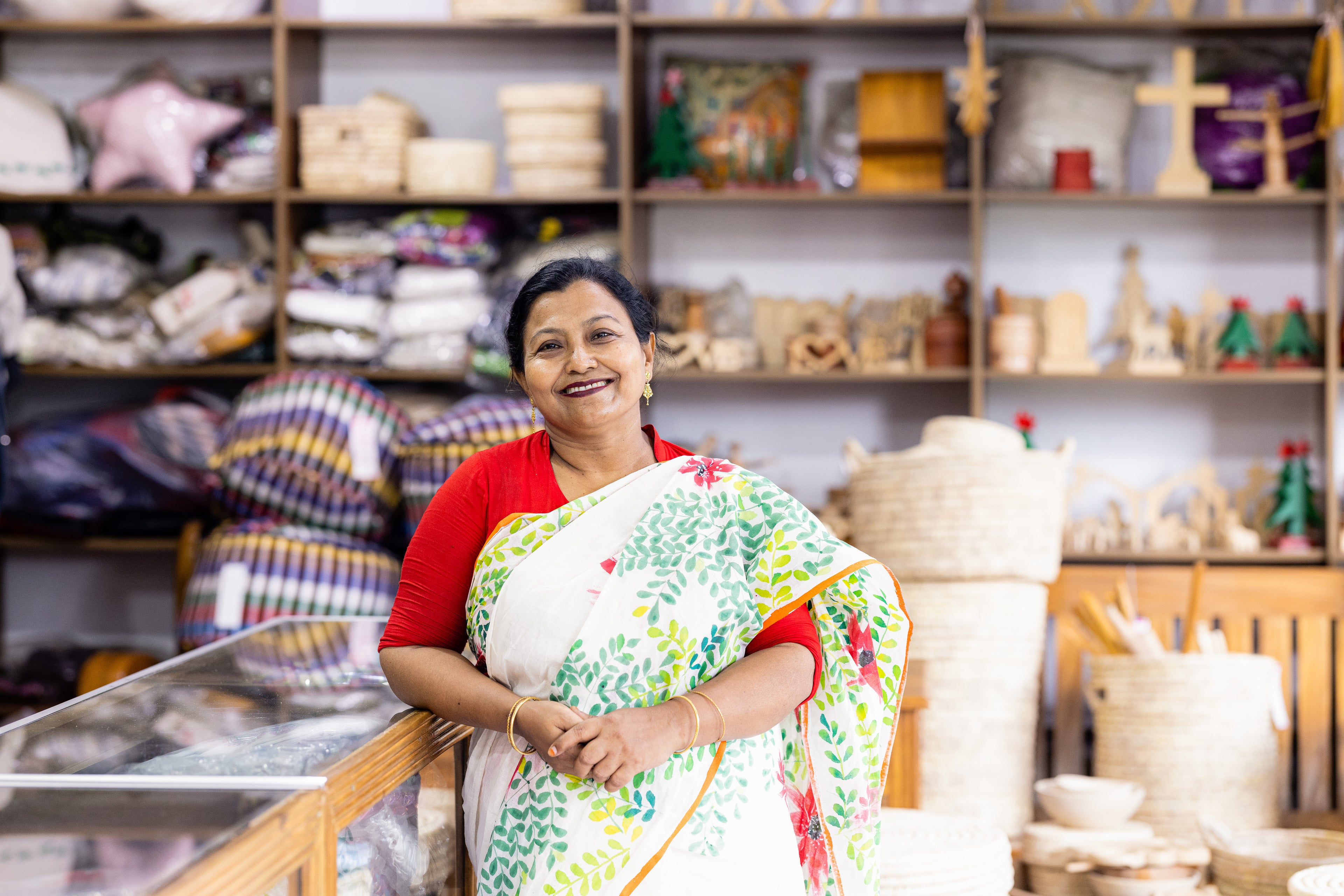
I knew I needed to do something to stand on my own feet and survive. That’s when I discovered Others. Now, I work as a shopkeeper at The Salvation Army's local show room in Jashore. I am very happy working here, as it allows me to support my husband. My dream is for Others to grow even bigger, creating employment opportunities for many people so that millions of girls like me can have a safe job.
-

Sajeda
I am a tailor and have been working at Others for 4 years. I specialize in creating new samples and sewing tablet and laptop sleeves, weekend bags, backpacks, tote bags, and shoulder bags. With my income, I cover all my family’s expenses and support my two daughters.
-

Mithun
I have been working at Others for 18 years. With my income, I cover all my family’s expenses and my children's education. I can make all of Others products, but I especially enjoy creating stars, spoons, paper towel dispensers, Christmas trees, and new samples.
-

Sukurunnesa
With my income, I have saved money in a bank for my daughter's future and also use my earnings to support my family. I hope to educate my daughter with these savings. I also aspire to continue working at Others and to train others so they can work like me and support their families.
-

Abraham
After joining with Others for the last 7 years, I changed my life with the income. With my monthly earnings I installed a water pump at my home and purchased furniture. I also use my money for our food and children's education. What I saw in the last 7 years is that all work transparently, fair wages, and unity. I am very grateful to Others.
-

Poly
I have been working at Others for 14 years. I specialize in embroidery, creating hearts, stars, shoe bags, laundry bags, floral purses, candles, and more. I am very happy and feel blessed.
-

Hamid
I have been working with Others for over 20 years. With my income from Others, I cover all my family expenses and my children's education. I have also bought a piece of land with my earnings. I can dye thread, make drums and bobbins, and weave different types of cloth.
-

Halima
I am the sole income earner in my family and I’m proud to work at Others. I’m saving for my daughter’s education.


GENERATIONAL CRAFT
Embroidery
Embroidery has been a cherished tradition in Bangladesh for generations, with each stitch carrying stories of culture and creativity.
Artisans work intricate patterns by hand, using techniques refined over centuries. What one generation masters, the next continues—stitch by stitch, pattern by pattern.

GENERATIONAL CRAFT
Handloom
Handloom weaving in Bangladesh is a tradition passed down through families, with artisans working wooden looms to create textiles by hand—the same way their parents and grandparents did before them.
The rhythm of the loom, the tension of the threads, the patterns that emerge—all of it is learned through years of practice. This craft keeps traditional techniques alive through the hands that still practice them.
